In Q1 I wrote about AppSumo being down 50% in revenue. I’ve wanted to give an update since then.
Without making you wait until the end: things are better.
Turns out there are more builders than ever making software and looking for tools to help run their businesses.
Want the one email I send when I have something worth sending?
114,000+ entrepreneurs get it. One story from my business, one tactic you can use. No schedule, no fluff.
We lost even more of our team
VP of Finance. Our only Product Manager. Senior Lead Designer. Our BA analyst. Head of Support. Key people in marketing.
That sucks and hurts. Some were voluntary, some were not.
A few were ready for new changes after many years in the same company.
What’s positive is that some people have just transitioned to contractors and the people leaving creates an opportunity for people to step up.
This is an area where I will do better as a leader.
All of tech is stressed right now
I have not met one person in tech who’s not more excited than ever but also working harder and stressed about WTF is going to happen.
Inside AppSumo, I’m seeing that people feel more pressure on themselves to equal the output of the larger team size. This is also the type of people we’ve historically hired 👉 humble hustlers.
There’s also a deeper layer of stress underneath all of this: whether their job is safe, and whether AI could eventually replace parts of their role or make companies like ours less necessary.
My job is to help create a vision, help people work at a sustainable pace and build resilience across the company.
Launching is easy. Sticking around 16 years is hard.
The hard reality of a smaller team is less redundancy. One vacation or one resignation can slow the company down fast.
That creates the real challenge: how do we get more output with less while rebuilding redundancy? That’s a big focus for us in May.
We went back to basics
When you’re at 40 people and down 50% revenue over two years, complexity is a luxury.
We simplified our entire focus down to two numbers: 30 and 300.
- 30 product launches a month
- 300 transacted SKUs in the store
That’s it. That’s the scoreboard.
We streamlined our sales process to get there:
- Improved our algorithm to rank which partners will perform best before we reach out
- Reviewed every step of the sales process (we’d overcorrected from dealing with too many shitty partners)
- Enhanced our partner marketing playbooks so partners can maximize their campaigns and keep the majority of the money
The results are showing up. We hit 290 SKUs last week.
March came in 18% above expectations. April has been super promising!
AI adoption is messier than it looks
A lot of posts make it sound like you can turn on AI and your whole company changes overnight.
That has not been my experience.
Some of our top salespeople don’t have the space to learn a bunch of new tools while still doing their actual jobs. And when the output is wrong, it costs them time instead of saving it.
So the real challenge is not just giving people AI. It’s redesigning how work happens.
It’s taking longer than expected, and I’m grateful to have people like Emilie and Anna helping drive it across the company.
That’s just the truth of changing a real company with real habits and legacy systems.
What I said we’d do, and what actually happened
New deal types. We still haven’t cracked this. AI-driven variable costs make traditional deals harder to structure in a way that works for us and for customers.
New deal UX works. This is working. Showing deals in a more familiar, usage-based way has been a good change.
AI implementation. We enabled this in deal setup, support automation, and sales outreach. The reality is that it’s both easier and harder than it appears. Articles online make it seem like your whole company can adopt AI overnight, but when you have lots of legacy systems and habits, it’s harder than that.
Reduced costs. We always target a 10% Net Operating Income monthly budget and haven’t hit that consistently for a few months. We reduced team costs, software, and other expenses, and we’re getting closer.
Selling outcomes. This has worked okay. Selling results instead of just software makes sense, but customer behavior does not change overnight. Still, we’ve learned a lot from testing it.
The big thing I keep thinking about: Tailwinds
Tailwinds are moving the world:
- Usage-based pricing
- Claude / Codex
- AI agents running your biz
- Using skills, etc.
So how are we selling and giving people what they want? That’s what we’re leaning into.
Sell where things are going, not how things have been.
Where the puck is going
Cautiously open the doors. Let customers and partners tell us more of what they want to buy and sell, while keeping our quality bar high.
Centralize intelligence. When we make sales calls or a product launches, there’s no single continuous feedback loop making our company better and better. This is what the top AI companies are doing today, and 100% of companies will have to do to compete in the future. It applies across every department.
Happy team, happy life. This is a hard moment in tech. It’s easy for work to become 24/7. We need to keep performance high without burning people out.
We have more to do. But we’re getting there.
Previously: We’re Down 50% in Revenue – Here’s What I’m Doing About It
Originally published as an article on X on 2026-04-28.
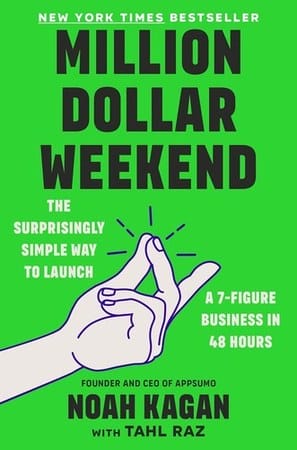
Start a business in 48 hours.
Million Dollar Weekend is the process I used for eight businesses, written down. #1 on Amazon and Audible.
Read the first chapter free
Leave a Reply