The short version: Matt D’Avella graduated with $97,000 in student debt, built a six figure freelance video business by living with his parents and turning down $300 clients, put $10,000 into a documentary called Minimalism that hit number one on iTunes and got picked up by Netflix, then spent a year failing on YouTube before one video got over a million views. The channel is at 2.78 million subscribers. His rule: don’t be an expert, be an experimenter. Try a thing for 30 days, show what happened, and say so when it didn’t work.
Updated September 2026. Originally published July 2020.
Matt D’Avella thought he could talk about three things on YouTube. Minimalism, filmmaking, maybe freelancing. Those were the topics he was an expert in, and he believed you had to be an expert in anything you made a video about.
Then he quit social media for 30 days and filmed it.
Want the one email I send when I have something worth sending?
114,000+ entrepreneurs get it. One story from my business, one tactic you can use. No schedule, no fluff.
“I decided on YouTube specifically that early on I wasn’t going to be an expert. I was going to be an experimenter. That’s when I realized, oh, that really works. If I just try a thing for 30 days and I track that experiment and show my experience doing it, people really found that interesting.”
He has done 11 or 12 of them since, cold showers, waking up at 5 a.m., journaling every day. The titles are utilitarian and boring on purpose, and the channel is at 2.78 million subscribers. If you told me to make a video about coffee, mine would be 20 seconds: yeah, coffee good, I had it, I like it. His, you would watch the whole thing. I wanted the part below the iceberg. What it cost to get to the point where he could afford to run experiments.
The runway
Matt graduated with $97,000 in student debt and started freelance filmmaking in college. Bar mitzvahs, wedding videos, local TV commercials, anything that paid. He saw people far more talented than him who couldn’t get the business side down. “I think doubt holds a lot of people back. The uncertainty of not getting work, because as every freelancer knows you have good times and you have bad times, and being able to stomach it and push through is huge.”
What let him stomach it was moving back in with his parents.
“At the time it was the best decision I ever made because it allowed me to take more risks and it allowed me to say no. If you’re coming to me and you’re like, hey, $300 to work on this video for a week, then I could easily just say sorry, my budget starts at 4k or 5k.”
Saying no to the $300 clients is how he got the ones that mattered. An early client was Viddler, which was competing with YouTube back in 2006 or 2007. That led to a testimonial video for InVision, which led to InVision funding a feature documentary, Design Disruptors, that he directed and produced. In five or six years the freelance business was doing six figures and most of the debt was gone.
Then he dropped everything and spent about two years as a one man band shooting and editing a documentary with his friends who run The Minimalists. He put $10,000 into it. It went to number one on iTunes, Netflix picked it up, and it trended on their site. He made his money back and, more important, had runway. So he asked the question everyone says they would ask if money didn’t matter.
“If I could do anything regardless of money, what would I do? That’s when I decided to lean into creating original content, making a podcast, doing a YouTube channel, all these things that I actually thought at the time were going to be impossible. I would regret it for the rest of my life if I didn’t take the next few years and really dig in and try to make it work.”
A year of failing, then one video
The first year was the Joe Rogan model. Record a podcast, upload it, cut excerpts, post them on social. It grew, but not enough to live on.
About a year and two months in he noticed people making minimalist apartment tour videos. He was a minimalist with an apartment. So he made one, but he wrote it out, planned it, added jokes, and shot it with everything he had learned in 10 years of filmmaking.
“Within a week it had 20,000 views. Within a couple months I’m having a couple hundred thousand views, and eventually that video got over a million views. That was the inflection point. Just one amazing video every week versus 10 excerpts that were pretty good.”
Eight to ten years of freelancing to be ready for the film. A couple more to be ready for the channel. A year of failing on the channel to find the one video. There was no shortcut in there anywhere. (I know what that year costs. I spent $222,038 growing my own channel.)
Say when it didn’t work
The experiments only work if you tell people the truth about them. Waking up at 5 a.m. for 30 days “was actually a nightmare,” especially on weekends, through travel, through daylight savings. He expected to be crazy productive and was sleep deprived and unfocused instead. Journaling every day he didn’t get much out of. Maybe a couple times a month.
“If you’re the person that’s like, journaling changed my life forever, and you say that for everything, then people start to call bullshit and see right through the fact that you’re just trying to get more views.”
I don’t think most people making content are lying on purpose. They just don’t notice they’re doing it. Matt’s fix is to split the two jobs. When you sell something, become an expert in that thing first, build the best product you can, and then you actually are the expert when you talk about it. Everything else, you get to be a person who tried something and failed in public. He said the moment you claim you’ve figured out habits, someone tries to copy you, hits resistance and decides something is wrong with them. “No, actually, something’s just wrong with humans.”
The same honesty runs the business side. He’ll spend half a day on a sketch, watch it back, see it’s corny, and throw it out. Design Disruptors had 60 or 70 interviews from 20 tech companies. “It’s more about what you take out of these films and projects than it is what you actually put in.” The best note he ever got was from the editor of Helvetica, who watched Minimalism and told him his main protagonist says the same thing four times in the movie. “Audiences are smart. You don’t need to keep reinforcing this thing.”
He was 20-something and making six figures freelancing when he walked away from it. I asked how he knew it was time.
“You’ll never feel totally ready. Have your parachute before you make the jump. I recommend, if you can, move back home with your parents. I don’t care if you’re 20, if you’re 30, whatever. If you want to make something happen, cut your bills down as low as you possibly can.”
You can do the overlap, nights and mornings before work and weekends, for a while. Then you burn out. He brought up Ali Abdaal, working full time as a doctor and putting out three videos a week, and said not many people have that stamina. He doesn’t. The honest question is how long you could keep the side hustle going before you have to put everything in. My version is in when to quit your job, and the whole point of Million Dollar Weekend is the same as his parachute: get paid before you jump.
My signature experiment is the coffee challenge. Ask for 10 percent off a coffee, get rejected, find out rejection is not that bad. Matt’s, in his words, is more boring. People love their four hour morning routines with the chakras. For him the most productive thing is to make a cup of coffee and start writing. So the Matt D’Avella challenge: coffee, then write for an hour, every day for 30 days.
You don’t have to be an expert on anything to do that. Pick one thing, run it for 30 days, and tell people what happened, including the part where it was a nightmare.
From episode 156 of my podcast, Noah Kagan Presents. Listen on Spotify or Apple Podcasts.
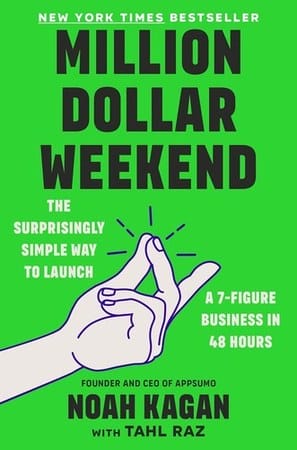
Start a business in 48 hours.
Million Dollar Weekend is the process I used for eight businesses, written down. #1 on Amazon and Audible.
Read the first chapter free
4 responses to “Matt D’Avella’s rule: be an experimenter, not an expert”
Very nice
manny show me
Very nice and interesting
This what insanely good. Best part – be an experimenter and not an expert. Fear has kept me off the sidelines with this because I feel like I don’t have enough of the right knowledge to actually got out and share it.